
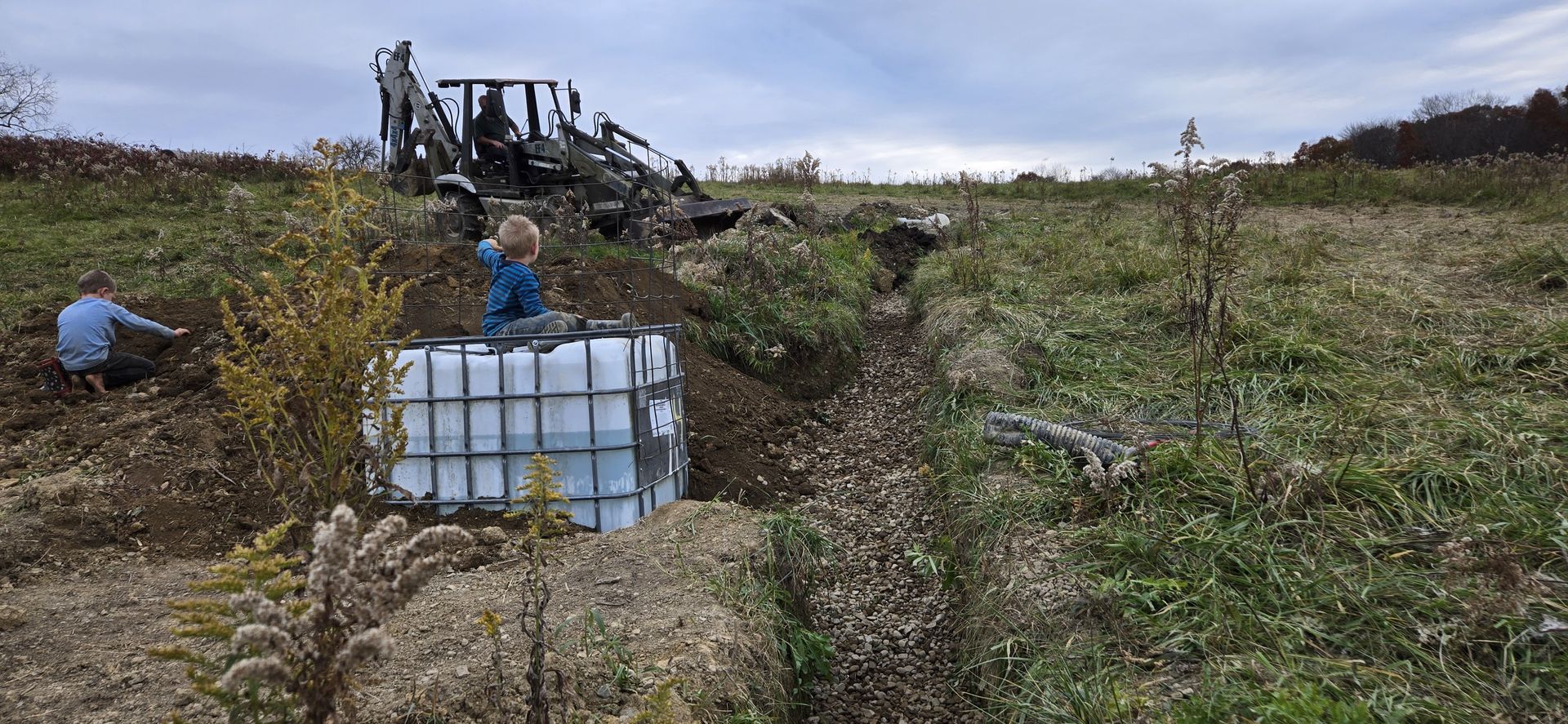
There's a wet spot in one of our fields, and we always figured it might be a spring. This fall we dug into it with the backhoe to find out.
What we found was field drains. The pipe was crushed right where the wet spot was, so we kept digging the drains back. We filled that pit with gravel, so the water has a clear path through it.
Then we cut a slot in the trench and cut plastic from an IBC tote, one of those big square water totes in a metal cage, to make a manifold with two holes. One is for a two-inch pipe and one is for a four-inch pipe, and the two-inch sits lower than the four-inch. On the gravel side of the wall, where the dam is, we set short pieces of pipe about two feet long, each capped on the end, with holes drilled in the bottom. They work like a strainer. Water hits the dam, rises up through the gravel, goes up through those holes, and then drops down into the pipe. Because the gravel is bigger than the holes, the gravel can't get into the pipe, and we're hoping it keeps out some of the dirt too. Then we backfilled behind the manifold with gravel.
We hooked into the two-inch pipe and ran it down the trench to a spot about eight feet up from the bottom of the trench. There we sank a second tote into the ground, at a height cattle can comfortably walk up to and drink from the top. The two-inch pipe goes into the tote underground. We cut a hole in the bottom of the tote and ran a two-inch riser pipe inside it, almost to the top.
Here's how it works. Water comes down the hill from the spring area, through the gravel, and into the two-inch pipe. It fills the tote, and once it reaches the top of the riser it flows out, tees into the four-inch pipe, and runs down to a small pond we dug below. The four-inch pipe is the bypass. If more water comes than the two-inch pipe can carry, it goes into the four-inch and skips the tank.
The reason for all this is winter water that won't freeze. The tote is partway underground and the water is always moving, which should keep it from freezing. We also cut a small section of plastic out of the top of the tote so the cows can walk right up and have water right there.
The water is super clear and a deep blue. You can hardly see the surface, and you can see the bottom of the tank. It's very fresh spring water.
This is also the missing piece for hay. Right now the herd eats from a feed ring in a wet spot by the barn. With water out in the field, we can unroll hay out there, maybe even this winter, and spread the nutrients around. Join the Firm Foundation Farm email list to see how it works once the cold hits. Have you ever tapped a spring on your place?